Skip to content
MovieCove
Time

Time

2021–Ongoing3 seasons9 episodes~59 min/epMidcredits score: 95th percentile of all shows

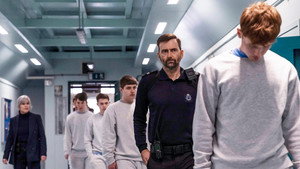
Guilt, violence and impossible choices – what does it take to survive? Tense, gritty and heartbreaking – Jimmy McGovern's award-winning prison drama, with an all-star cast.

Your rating, lists and review

Where can I watch Time?

As of October 24, 2026, MovieCove lists Time streaming on BritBox and Prime Video (free) and to rent or buy on Apple TV and Prime Video.

Subscription

Rent / Buy

What stands out about Time?

Time earns 5 badges, led by Top 5% of shows and Universally Loved.

  • Rank
  • Reception
  • Craft and mood

Is Time worth watching?

Time's Midcredits score is the 95th percentile of all shows, from 33K ratings across 2 sources. 94% liked it (rated it 7 or higher out of 10).

Midcredits score

How well it was received

95th percentile

Better received than 95% of shows

95th percentile among Crime96th percentile among 2020s
Acclaim (how much people like it)87th
Approval (how many liked it)98th

Acclaim

Universally Loved: Rating-distribution shape vs the catalog

How much people like it

80 /100

87th percentile of all shows

91st percentile among Crime89th percentile among 2020s

Rating distribution

Ratings pile up at 9–10 with almost no detractors — near-universal love.

Approval

How many liked it

94% liked it

98th percentile of all shows

97th percentile among Crime98th percentile among 2020s
94% rated it 7–106% rated it 1–6

Reach

How many have seen it

97th percentile

33K ratings across platforms

94th percentile among Crime98th percentile among 2020s
TMDB popularity, last 37 days to Oct 26Up 274% in 30 days

What reviewers say

Common ground

Both camps acknowledge the outstanding acting from Sean Bean and Stephen Graham, even if they disagree on the story's effectiveness.

Fans praised

  • Career-best performances from Sean Bean and Stephen Graham
  • Gripping, realistic portrayal of prison life and its moral dilemmas
  • Brilliant script by Jimmy McGovern balancing empathy with unflinching grit

Detractors panned

  • Predictable and cliché-ridden story with no new insight
  • Slow pacing that fails to build sufficient engagement
  • Unrealistic character decisions and contrived plot mechanics

What stands out

Acting95

Sean Bean and Stephen Graham deliver career-defining, emotionally raw performances; supporting cast also praised

Emotional impactDivisive86

Profoundly moving for fans; detractors find it manipulative or hollow

CharactersDivisive78

Deeply humane characterizations of flawed individuals; some detractors call them stock types

Plot and storyDivisive70

Compelling but uneven; fans laud emotional weight, detractors call it predictable and thin

Preferred by

US vs non-US

Preferred by Non-US Viewers

Non-US viewers scored it 13 points higher than US viewers.

No notable difference between the other groups: each pair ranks it within 10 percentile points.

  • Women vs men 8 points apart
  • Under-30s vs over-30s 6 points apart
  • Critics vs users 8 points apart

Episodes

3 seasons

Series 3 · 2026 · 3 episodes

  • S3E1

    Episode 1

    Oct 11, 202659 min
  • S3E2

    Episode 2

    Oct 12, 202658 min
  • S3E3

    Episode 3

    Oct 18, 202661 minFinale

What is Time like to watch?

Conclusions only — categories and positions, no plot detail.

Earnest, dark and intense — a relentless watch that leaves you thinking.

ToneFeelDemandexact position · filled zone: the category

What it feels like

Moods
TenseMelancholicContemplative
Heaviest: throughout
Register
Solemn: Grave and dignified; treats its subject with weight and respect.Brooding: Heavy, inward, weather-beaten.Brutal · 3% of shows
Told as
Three-act: Setup, confrontation, resolution — the default Hollywood shape.Anthology episodes · 6% of showsAnthology seasons · 2% of shows
ToneThe film holds its material with unflinching seriousness and sincerity, presenting prison life with raw, harrowing realism rather than any ironic distance.
The rideThe series maintains a sustained pressure of threat and quiet desperation in every episode — the tension of prison life never lets up, though it occasionally breaks for human warmth.
StructureThe series presents its stories in a conventional, chronological manner, following the characters' experiences within the prison. No notable non-linear or framing devices are indicated.
Episode formatEach season presents a self-contained story with a new cast, though the series shares a thematic throughline about the prison system as a whole.
Season formatEach season explores a different story within the prison milieu, with a largely new cast and premise while maintaining the anthology's thematic coherence.

How it leaves you

what you carry away
Thought-provokingUnsettling
Why it leaves you this wayThe series leaves the viewer with a lasting unease and a deep consideration of the prison system's failings and the moral compromises it forces, prompting reflection long after watching.
How it ends · evidence
Bittersweet ending

Story archetype

where it sits among all shows
Monster — 18% of shows. A threat menaces the hero's world and must be defeated.Rags — 3% of shows. A rise from lowliness to fortune, status, or recognition.Quest — 6% of shows. A journey toward a defined objective, with companions and obstacles.Voyage — 2% of shows. Into a strange world and back again, changed.Comedy — 12% of shows. Confusion and cross-purposes resolved into harmony.Tragedy — 4% of shows. A flaw or fixation drives the protagonist to ruin.Rebirth — 7% of shows. A stalled or darkened life reopened and renewed.Mystery — 8% of shows. A question drives the story — who did it, what happened, what is real — until it is answered.No archetype — 40% of showsPredator — 7% of shows. A creature or killer hunts the protagonists (Jaws, Alien).Tyrant — 3% of shows. A human villain holds power over the hero's world (Die Hard).Invasion — 2% of shows. An external force attacks the home or world (Independence Day).Oppressive state — 3% of shows. A government, its agencies or a secret faction inside them is the monster (V for Vendetta).Corporate villainy — 1% of shows. A company or its bosses are the monster (Erin Brockovich).Institutional injustice — 1% of shows. A court, prison, police force, school or church is itself the enemy (Spotlight).Class system — under 1% of shows. The gap between rich and poor, or a rigid hierarchy, is the monster (Parasite).Technology turns — under 1% of shows. Technology people rely on becomes the threat (The Terminator).Inner demon — 1% of shows. The monster is within — addiction, illness, a dark double.Underdog triumph — 2% of shows. Rise through competition or contest (Rocky).Social ascent — 1% of shows. A climb in class or status (Pretty Woman).Fame and fortune — under 1% of shows. An artistic or showbiz rise (A Star Is Born).Rise and fall — under 1% of shows. Wealth or power gained, self lost (Scarface).Hidden worth revealed — under 1% of shows. The protagonist's true value finally recognized.Treasure hunt — 1% of shows. Retrieve an object of value (Raiders of the Lost Ark).Rescue — 2% of shows. Retrieve or save a person (Saving Private Ryan).Mission — 4% of shows. Accomplish or destroy a defined objective (Mission: Impossible).Journey home — under 1% of shows. The goal is getting back (Finding Nemo).Pilgrimage — under 1% of shows. The journey itself transforms; the destination is symbolic.Portal fantasy — under 1% of shows. Transported into another world (The Wizard of Oz).Fish out of water — 1% of shows. Displaced into an unfamiliar social world (Elf).Survival ordeal — under 1% of shows. Trapped in a hostile environment, fighting back (Cast Away).Time displacement — under 1% of shows. Unstuck in time (Back to the Future).Descent — under 1% of shows. A night-journey into an underworld or subculture (After Hours).Romantic comedy — 2% of shows. Lovers kept apart by confusion, united at last.Comedy of errors — 3% of shows. Mistaken identity or misunderstanding drives the plot.Farce — 2% of shows. Escalating absurd chaos and coincidence (The Hangover).Buddy comedy — 1% of shows. A mismatched pair forced together (Rush Hour).Comedy of manners — 2% of shows. Social codes and class satirized (Clueless).Hubris — 1% of shows. Pride or ambition invites the fall (There Will Be Blood).Obsession — under 1% of shows. A fixation consumes the protagonist (Black Swan).Corruption arc — 1% of shows. Step-by-step moral decay (The Godfather).Doomed love — 1% of shows. Love destroyed by circumstance (Brokeback Mountain).Crushed by fate — 1% of shows. Destroyed by forces beyond the protagonist's control.Redemption — 1% of shows. Moral reawakening of a hardened soul (A Christmas Carol).Healing — 3% of shows. Recovery from grief or trauma (Good Will Hunting).Liberation — 2% of shows. Breaking free of a confining life (Room).Second chance — 1% of shows. A stagnant life re-opened to love or purpose (Groundhog Day).Puzzle — 1% of shows. A clue-by-clue puzzle you can try to solve before the reveal (Knives Out, Clue).Investigation — 6% of shows. A long pursuit of the truth that may never be fully solved (Zodiac, Memories of Murder).Enigma — 1% of shows. The mystery is what is real, or what is actually happening (Mulholland Drive).Monster
Every story archetype, clockwise from the top
  • Monster 18% (this title): Predator 7% · Tyrant 3% · Invasion 2% · Oppressive state 3% · Corporate villainy 1% · Institutional injustice 1% (this title) · Class system under 1% · Technology turns under 1% · Inner demon 1%
  • Rags 3%: Underdog triumph 2% · Social ascent 1% · Fame and fortune under 1% · Rise and fall under 1% · Hidden worth revealed under 1%
  • Quest 6%: Treasure hunt 1% · Rescue 2% · Mission 4% · Journey home under 1% · Pilgrimage under 1%
  • Voyage 2%: Portal fantasy under 1% · Fish out of water 1% · Survival ordeal under 1% · Time displacement under 1% · Descent under 1%
  • Comedy 12%: Romantic comedy 2% · Comedy of errors 3% · Farce 2% · Buddy comedy 1% · Comedy of manners 2%
  • Tragedy 4%: Hubris 1% · Obsession under 1% · Corruption arc 1% · Doomed love 1% · Crushed by fate 1%
  • Rebirth 7%: Redemption 1% · Healing 3% · Liberation 2% · Second chance 1%
  • Mystery 8%: Puzzle 1% · Investigation 6% · Enigma 1%
  • No archetype 40%

Overcoming the monster: A threat menaces the hero's world and must be defeated. · Institutional injustice: A court, prison, police force, school or church is itself the enemy (Spotlight).

18% of shows fit this archetype

with Tragedy underneath

A loose fit — the map only half-holds this one.

Why this archetypeThe typical episode follows a prisoner or officer grappling with the oppressive prison system, where the institution itself and its brutal realities are the central antagonist. The synopsis and reviews emphasize the dehumanizing environment and moral dilemmas, making institutional_injustice a fitting subtype.

What it's about

7 groups · 53 themes
Bonds — 31% of showsSelf — 27% of showsPower — 7% of showsMorality — 11% of showsSurvival — 9% of showsSociety — 10% of showsIdeas — 5% of showsRomantic love — 10% of showsMarriage — 2% of showsFamily bonds — 22% of showsParenthood — 1% of showsFriendship — 18% of showsLoyalty — 7% of showsIdentity — 20% of showsComing of age — 9% of showsAging — under 1% of showsSelf-worth — 7% of showsAmbition — 14% of showsPurpose — 16% of showsMemory — 3% of showsObsession — 2% of shows. A fixation consumes the protagonist (Black Swan).Power — 5% of showsCorruption — 3% of showsGreed — 2% of showsClass — 4% of showsOppression — 2% of showsFreedom — 4% of showsJustice — 14% of showsDuty — 2% of showsRevenge — 1% of showsGuilt — 1% of showsRedemption — 3% of shows. Moral reawakening of a hardened soul (A Christmas Carol).Forgiveness — under 1% of showsSacrifice — 2% of showsBetrayal — 3% of showsDeception — 6% of showsSurvival — 12% of showsWar — 1% of showsViolence — 2% of showsMortality — 2% of showsGrief — 4% of showsTrauma — 5% of showsMental illness — under 1% of showsAddiction — under 1% of showsIllness and disability — under 1% of showsCommunity — 25% of shows. Consequences reach a town, institution or group.Isolation — 3% of showsPrejudice — 2% of showsDisplacement — 1% of showsFaith — 1% of showsTradition vs change — 3% of showsFame — 5% of showsLegacy — 3% of showsFate — 1% of showsFree will — under 1% of showsTruth — 6% of showsHope — 4% of showsNature — 3% of showsArt — 2% of showsTechnology — 1% of showsSelfPurposeSelf
Every theme, clockwise from the top
  • Bonds 31%: Romantic love 10% · Marriage 2% · Family bonds 22% (this title) · Parenthood 1% · Friendship 18% · Loyalty 7%
  • Self 27% (this title): Identity 20% · Coming of age 9% · Aging under 1% · Self-worth 7% · Ambition 14% · Purpose 16% (this title) · Memory 3% · Obsession 2%
  • Power 7%: Power 5% · Corruption 3% · Greed 2% · Class 4% · Oppression 2% · Freedom 4%
  • Morality 11%: Justice 14% · Duty 2% · Revenge 1% · Guilt 1% (this title) · Redemption 3% · Forgiveness under 1% · Sacrifice 2% · Betrayal 3% · Deception 6%
  • Survival 9%: Survival 12% · War 1% · Violence 2% · Mortality 2% · Grief 4% · Trauma 5% · Mental illness under 1% · Addiction under 1% · Illness and disability under 1%
  • Society 10%: Community 25% · Isolation 3% · Prejudice 2% · Displacement 1% · Faith 1% · Tradition vs change 3% · Fame 5% · Legacy 3%
  • Ideas 5%: Fate 1% · Free will under 1% · Truth 6% · Hope 4% · Nature 3% · Art 2% · Technology 1%

Self

PurposeFamily bondsGuilt · 1% of shows
Interrogates its theme: Questions its theme without settling the answer.Community stakes: Consequences reach a town, institution or group.Dual lead
How it treats its themeThe series interrogates how incarceration reshapes a person's reason for living — whether that's surviving, protecting a child, or accepting responsibility — and how the prison system tests these fragile purposes.
StanceThe series interrogates the British penal system's dehumanizing effects, consistently questioning whether punishment serves justice or simply destroys people.

The world

ContemporaryInstitutionalRealistic
AmbientMinimal or silentBackground music · original score
SettingBritish prisons and their surrounding communities
MusicScoring is sparse and atmospheric, allowing the harsh sounds of prison life — gates, keys, shouts — to dominate the soundscape.

Is Time okay for kids?

As of October 3, 2026, Midcredits content scores put its violence at intense (80/100), sexual content at mild (21/100), language at intense (71/100), drug and alcohol content at intense (74/100) and frightening material at intense (73/100). Overall it is heavier than 84% of all shows.

Ratings in 17 other countries
  • UK15
  • Canada18+
  • AustraliaM
  • Germany12
  • France16
  • Ireland15
  • Brazil16
  • Czechia18+
  • FinlandK16
  • Hungary16
  • MexicoC
  • Poland16
  • ROAP
  • SingaporeM18
  • South Africa16
  • Spain16
  • SwedenFrån 15 år
Overall
Intense · all five categories
Heavier than 84% of all shows
Violence & Gore
Intense
heavier than 82% of all shows
Sex & Nudity
Mild
heavier than 16% of all shows
Profanity
Intense · audience split: No severity level holds a majority of voters
heavier than 77% of all shows
Alcohol & Drugs
Intense
heavier than 90% of all shows
Frightening / Intense
Intense
heavier than 83% of all shows

Point along a line to see a well-known title at that level.

Heavy almost across the board: violence, drug and alcohol content, frightening material, and language.

Source: Midcredits content scores, 0 (none) to 100 (severe) per category, with each standing ranked against other shows that have them.

What content warnings does Time have?

Not screened for content warnings yet.

Who is in Time?

What are shows like Time?

TMDB's suggestions for shows like Time include Wentworth (2013), Escape at Dannemora (2018) and I Will Find You (2026).


Like this, but

What other shows share a tag with Time?

20 other shows share the rarest tag below, premise: prison escape. Each tag opens Browse with the shows that share it.