Skip to content
MovieCove
Roman Empire

Roman Empire

2016–2019Ended3 seasons15 episodes~45 min/epTV-MAMidcredits score: 54th percentile of all shows

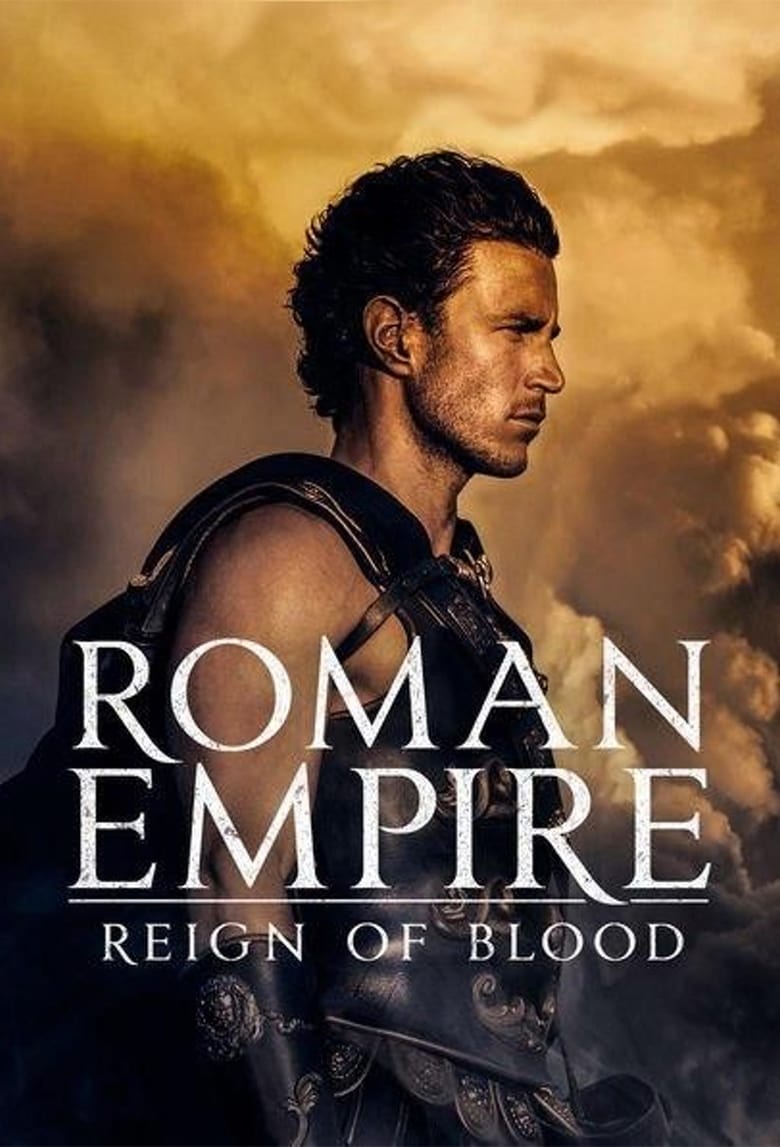
This stylish mix of documentary and historical epic chronicles the reign of Commodus, the emperor whose rule marked the beginning of Rome's fall.

Your rating, lists and review

Where can I watch Roman Empire?

As of October 24, 2026, MovieCove lists Roman Empire streaming on Acorn TV via The Roku Channel, Netflix and The Great Courses via Prime Video and to rent or buy on Prime Video.

Rent / Buy

What stands out about Roman Empire?

Roman Empire earns 2 badges, led by Preferred by Men and Broadly Agreed.

Is Roman Empire worth watching?

Roman Empire's Midcredits score is the 54th percentile of all shows, from 11K ratings across 2 sources. 74% liked it (rated it 7 or higher out of 10).

Midcredits score

How well it was received

54th percentile

Better received than 54% of shows

45th percentile among Documentary52nd percentile among 2010s
Acclaim (how much people like it)50th
Approval (how many liked it)58th

Acclaim

Broadly Agreed: Rating-distribution shape vs the catalog

How much people like it

71 /100

50th percentile of all shows

39th percentile among Documentary48th percentile among 2010s

Rating distribution

A broad spread centered near 7.1 — solid but not unanimous.

Approval

How many liked it

74% liked it

58th percentile of all shows

52nd percentile among Documentary56th percentile among 2010s
74% rated it 7–1026% rated it 1–6

Reach

How many have seen it

82nd percentile

11K ratings across platforms

97th percentile among Documentary82nd percentile among 2010s
TMDB popularity, last 37 days to Oct 26Up 26% in 30 days

What reviewers say

Common ground

The series is a dramatized docu-drama that takes significant liberties with historical accuracy.

Fans praised

  • engaging hybrid docu-drama format mixing historians and reenactments
  • strong narration and credible historian commentary
  • decent entertainment value and production quality for a docu-series

Detractors panned

  • pervasive and egregious historical inaccuracies in events, dates, and military tactics
  • gladiators and legionaries depicted with Hollywood-style swinging rather than disciplined formation fighting
  • sensationalized sex scenes and low-budget reused footage detract from documentary credibility

What stands out

CinematographyDivisive50

good production design and costumes but marred by cheap reused shots

PacingDivisive50

binge-friendly but uneven; drama segments feel slow and repetitive

AtmosphereDivisive50

decent world-building but inconsistent realism (modern hair, anachronistic props)

ActingDivisive45

mediocre to passable; some praise for Commodus actor but many call casting stiff or porn-star-like

CharactersDivisive40

shallow writing; Commodus gets psychological depth from fans but detractors call them one-note

Plot and storyDivisive35

erratic timeline; historical fabrications and squeezed events confuse narrative

DialogueDivisive35

stiff and anachronistic; some literate passages but often wooden

OriginalityDivisive30

derivative of previous Roman epics (Rome, Spartacus) with clichéd tropes

Preferred by

Women vs men

Preferred by Men

Men scored it 14 points higher than women.

No notable difference between the other groups: each pair ranks it within 10 percentile points.

  • Under-30s vs over-30s 5 points apart
  • US vs non-US 6 points apart

Episodes

3 seasons

Caligula: The Mad Emperor · 2019 · 4 episodes

  • S3E1

    The Rightful Heir

    Apr 5, 201944 min
  • S3E2

    A New Hope

    Apr 5, 201940 min
  • S3E3

    In Search of an Heir

    Apr 5, 201938 min
  • S3E4

    Descent into Madness

    Apr 5, 201940 minFinale

What is Roman Empire like to watch?

Conclusions only — categories and positions, no plot detail.

Earnest, serious and intense — an even-paced watch that leaves you thinking.

ToneFeelDemandexact position · filled zone: the category

What it feels like

Moods
TenseMelancholicThrillingBittersweet
Heaviest: throughout
Register
Solemn: Grave and dignified; treats its subject with weight and respect.Epic · 3% of shows: Vast in scale: big landscapes, big stakes, a long span.
Told as
Frame story · 3% of shows: A story told inside another — someone is recounting it.Episodic · 11% of shows: Loosely connected incidents rather than one driving plot.Case of the week plus an arcAnthology seasons · 2% of shows
ToneThe series treats its historical subject with gravity, but the dramatized reenactments add an epic, larger-than-life quality.
The rideThe series maintains a consistently high-pressure, violent atmosphere of political intrigue and warfare, with a somber and melancholic weight carried across every season.
StructureExpert interviews frame dramatized reenactments; each episode covers a distinct historical period.
Episode formatWhile the series is an anthology with a new arc per season, each episode functions like a self-contained 'case' or vignette that dramatizes a specific event or crisis within that emperor's reign, while the season as a whole follows the arc of that emperor's rise and fall.
Season formatEach season tells a new, self-contained story focusing on a different historical figure (Julius Caesar, Commodus, etc.), largely with a new cast and setting.

How it leaves you

what you carry away
Thought-provokingBittersweet
Why it leaves you this wayThe series stimulates curiosity about Roman history while also conveying the tragic costs of power and ambition.
How it ends · evidence
Ambiguous ending

Story archetype

where it sits among all shows
Monster — 18% of shows. A threat menaces the hero's world and must be defeated.Rags — 3% of shows. A rise from lowliness to fortune, status, or recognition.Quest — 6% of shows. A journey toward a defined objective, with companions and obstacles.Voyage — 2% of shows. Into a strange world and back again, changed.Comedy — 12% of shows. Confusion and cross-purposes resolved into harmony.Tragedy — 4% of shows. A flaw or fixation drives the protagonist to ruin.Rebirth — 7% of shows. A stalled or darkened life reopened and renewed.Mystery — 8% of shows. A question drives the story — who did it, what happened, what is real — until it is answered.No archetype — 40% of showsPredator — 7% of shows. A creature or killer hunts the protagonists (Jaws, Alien).Tyrant — 3% of shows. A human villain holds power over the hero's world (Die Hard).Invasion — 2% of shows. An external force attacks the home or world (Independence Day).Oppressive state — 3% of shows. A government, its agencies or a secret faction inside them is the monster (V for Vendetta).Corporate villainy — 1% of shows. A company or its bosses are the monster (Erin Brockovich).Institutional injustice — 1% of shows. A court, prison, police force, school or church is itself the enemy (Spotlight).Class system — under 1% of shows. The gap between rich and poor, or a rigid hierarchy, is the monster (Parasite).Technology turns — under 1% of shows. Technology people rely on becomes the threat (The Terminator).Inner demon — 1% of shows. The monster is within — addiction, illness, a dark double.Underdog triumph — 2% of shows. Rise through competition or contest (Rocky).Social ascent — 1% of shows. A climb in class or status (Pretty Woman).Fame and fortune — under 1% of shows. An artistic or showbiz rise (A Star Is Born).Rise and fall — under 1% of shows. Wealth or power gained, self lost (Scarface).Hidden worth revealed — under 1% of shows. The protagonist's true value finally recognized.Treasure hunt — 1% of shows. Retrieve an object of value (Raiders of the Lost Ark).Rescue — 2% of shows. Retrieve or save a person (Saving Private Ryan).Mission — 4% of shows. Accomplish or destroy a defined objective (Mission: Impossible).Journey home — under 1% of shows. The goal is getting back (Finding Nemo).Pilgrimage — under 1% of shows. The journey itself transforms; the destination is symbolic.Portal fantasy — under 1% of shows. Transported into another world (The Wizard of Oz).Fish out of water — 1% of shows. Displaced into an unfamiliar social world (Elf).Survival ordeal — under 1% of shows. Trapped in a hostile environment, fighting back (Cast Away).Time displacement — under 1% of shows. Unstuck in time (Back to the Future).Descent — under 1% of shows. A night-journey into an underworld or subculture (After Hours).Romantic comedy — 2% of shows. Lovers kept apart by confusion, united at last.Comedy of errors — 3% of shows. Mistaken identity or misunderstanding drives the plot.Farce — 2% of shows. Escalating absurd chaos and coincidence (The Hangover).Buddy comedy — 1% of shows. A mismatched pair forced together (Rush Hour).Comedy of manners — 2% of shows. Social codes and class satirized (Clueless).Hubris — 1% of shows. Pride or ambition invites the fall (There Will Be Blood).Obsession — under 1% of shows. A fixation consumes the protagonist (Black Swan).Corruption arc — 1% of shows. Step-by-step moral decay (The Godfather).Doomed love — 1% of shows. Love destroyed by circumstance (Brokeback Mountain).Crushed by fate — 1% of shows. Destroyed by forces beyond the protagonist's control.Redemption — 1% of shows. Moral reawakening of a hardened soul (A Christmas Carol).Healing — 3% of shows. Recovery from grief or trauma (Good Will Hunting).Liberation — 2% of shows. Breaking free of a confining life (Room).Second chance — 1% of shows. A stagnant life re-opened to love or purpose (Groundhog Day).Puzzle — 1% of shows. A clue-by-clue puzzle you can try to solve before the reveal (Knives Out, Clue).Investigation — 6% of shows. A long pursuit of the truth that may never be fully solved (Zodiac, Memories of Murder).Enigma — 1% of shows. The mystery is what is real, or what is actually happening (Mulholland Drive).
Every story archetype, clockwise from the top
  • Monster 18%: Predator 7% · Tyrant 3% · Invasion 2% · Oppressive state 3% · Corporate villainy 1% · Institutional injustice 1% · Class system under 1% · Technology turns under 1% · Inner demon 1%
  • Rags 3%: Underdog triumph 2% · Social ascent 1% · Fame and fortune under 1% · Rise and fall under 1% · Hidden worth revealed under 1%
  • Quest 6%: Treasure hunt 1% · Rescue 2% · Mission 4% · Journey home under 1% · Pilgrimage under 1%
  • Voyage 2%: Portal fantasy under 1% · Fish out of water 1% · Survival ordeal under 1% · Time displacement under 1% · Descent under 1%
  • Comedy 12%: Romantic comedy 2% · Comedy of errors 3% · Farce 2% · Buddy comedy 1% · Comedy of manners 2%
  • Tragedy 4%: Hubris 1% · Obsession under 1% · Corruption arc 1% · Doomed love 1% · Crushed by fate 1%
  • Rebirth 7%: Redemption 1% · Healing 3% · Liberation 2% · Second chance 1%
  • Mystery 8%: Puzzle 1% · Investigation 6% · Enigma 1%
  • No archetype 40% (this title)

No archetype fits — true of 40% of shows: ensemble pieces, satire, slice-of-life.

Why this archetypeThe series is a docu-drama chronicling Roman leaders, not a single narrative.

What it's about

7 groups · 53 themes
Bonds — 31% of showsSelf — 27% of showsPower — 7% of showsMorality — 11% of showsSurvival — 9% of showsSociety — 10% of showsIdeas — 5% of showsRomantic love — 10% of showsMarriage — 2% of showsFamily bonds — 22% of showsParenthood — 1% of showsFriendship — 18% of showsLoyalty — 7% of showsIdentity — 20% of showsComing of age — 9% of showsAging — under 1% of showsSelf-worth — 7% of showsAmbition — 14% of showsPurpose — 16% of showsMemory — 3% of showsObsession — 2% of shows. A fixation consumes the protagonist (Black Swan).Power — 5% of showsCorruption — 3% of showsGreed — 2% of showsClass — 4% of showsOppression — 2% of showsFreedom — 4% of showsJustice — 14% of showsDuty — 2% of showsRevenge — 1% of showsGuilt — 1% of showsRedemption — 3% of shows. Moral reawakening of a hardened soul (A Christmas Carol).Forgiveness — under 1% of showsSacrifice — 2% of showsBetrayal — 3% of showsDeception — 6% of showsSurvival — 12% of showsWar — 1% of showsViolence — 2% of showsMortality — 2% of showsGrief — 4% of showsTrauma — 5% of showsMental illness — under 1% of showsAddiction — under 1% of showsIllness and disability — under 1% of showsCommunity — 25% of shows. Consequences reach a town, institution or group.Isolation — 3% of showsPrejudice — 2% of showsDisplacement — 1% of showsFaith — 1% of showsTradition vs change — 3% of showsFame — 5% of showsLegacy — 3% of showsFate — 1% of showsFree will — under 1% of showsTruth — 6% of showsHope — 4% of showsNature — 3% of showsArt — 2% of showsTechnology — 1% of showsSelfPower
Every theme, clockwise from the top
  • Bonds 31%: Romantic love 10% · Marriage 2% · Family bonds 22% · Parenthood 1% · Friendship 18% · Loyalty 7%
  • Self 27%: Identity 20% · Coming of age 9% · Aging under 1% · Self-worth 7% · Ambition 14% (this title) · Purpose 16% · Memory 3% · Obsession 2%
  • Power 7% (this title): Power 5% (this title) · Corruption 3% (this title) · Greed 2% · Class 4% · Oppression 2% · Freedom 4%
  • Morality 11%: Justice 14% · Duty 2% · Revenge 1% · Guilt 1% · Redemption 3% · Forgiveness under 1% · Sacrifice 2% · Betrayal 3% · Deception 6%
  • Survival 9%: Survival 12% · War 1% · Violence 2% · Mortality 2% · Grief 4% · Trauma 5% · Mental illness under 1% · Addiction under 1% · Illness and disability under 1%
  • Society 10%: Community 25% · Isolation 3% · Prejudice 2% · Displacement 1% · Faith 1% · Tradition vs change 3% · Fame 5% · Legacy 3%
  • Ideas 5%: Fate 1% · Free will under 1% · Truth 6% · Hope 4% · Nature 3% · Art 2% · Technology 1%

Power

Power · 5% of showsCorruption · 3% of showsAmbition · 14% of shows
Interrogates its theme: Questions its theme without settling the answer.Societal stakes: Consequences reach a whole social order.Single lead
How it treats its themeThe series explores how absolute power corrupts individual emperors, drives their ambition, and shapes (and often destroys) the Roman state and its people.
StanceThe series primarily interrogates the nature of power and its corrupting influence on the individual and the state, observing the disastrous personal and political consequences.

The world

AncientInstitutionalUrbanWildernessAlternate history
Orchestral modernSupportive music · original score
SettingThe Roman Empire at various points of crisis and transition

Is Roman Empire okay for kids?

TV-MA

Roman Empire is rated TV-MA. As of August 29, 2026, Midcredits content scores put its violence at intense (66/100), sexual content at intense (76/100), language at mild (30/100), drug and alcohol content at moderate (39/100) and frightening material at mild (33/100). Overall it is heavier than 29% of TV-MA shows.

Ratings in 16 other countries
  • UK15
  • AustraliaMA 15+
  • Ireland15
  • South Korea19
  • Brazil18
  • Austria16
  • Czechia18+
  • Hungary16
  • MexicoA
  • Netherlands16
  • PhilippinesG
  • Poland16
  • ROAP
  • SingaporeM18
  • Spain7
  • Switzerland16
Overall
Moderate · all five categories
Heavier than 57% of all showsHeavier than 29% of TV-MA shows
Violence & Gore
Intense · audience split: No severity level holds a majority of voters
typical for a TV-MA show
heavier than 52%
Sex & Nudity
Intense
heavy for a TV-MA show
heavier than 88%
Profanity
Mild
light for a TV-MA show
heavier than 3%
Alcohol & Drugs
Moderate
light for a TV-MA show
heavier than 25%
Frightening / Intense
Mild · audience split: No severity level holds a majority of voters
light for a TV-MA show
heavier than 17%

Point along a line to see a well-known title at that level.

The reason to think twice is sexual content and violence. Everything else sits at or below what TV-MA shows usually carry.

Source: Midcredits content scores, 0 (none) to 100 (severe) per category, with each standing ranked against other shows that have them.

What content warnings does Roman Empire have?

Not screened for content warnings yet.

Who is in Roman Empire?

What are shows like Roman Empire?

TMDB's suggestions for shows like Roman Empire include Marvel Studios: Legends (2021), The First 48 (2004) and Superpowered: The DC Story (2023).
Like this, but

What other shows share a tag with Roman Empire?

225 other shows share the rarest tag below, kind of show: biopic. Each tag opens Browse with the shows that share it.