
The Godfather Part II
The rise and fall of the Corleone empire.
- Director
- Francis Ford Coppola
- Starring
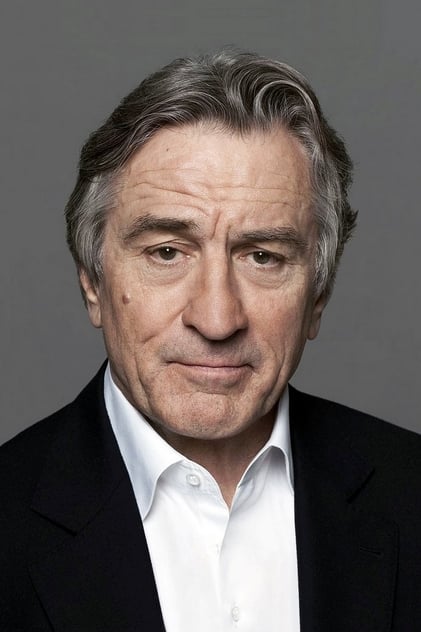
- Al Pacino, Robert Duvall, Diane Keaton, Robert De Niro
In the continuing saga of the Corleone crime family, a young Vito Corleone grows up in Sicily and in 1910s New York. In the 1950s, Michael Corleone attempts to expand the family business into Las Vegas, Hollywood and Cuba.
Where to watch
Where can I watch The Godfather Part II?
As of October 24, 2026, MovieCove lists The Godfather Part II streaming on Paramount+ and Pluto TV (free).
Subscription


Your rating, lists and review
Highlights
What stands out about The Godfather Part II?
The Godfather Part II earns 15 badges, led by Top 1% of films and Stood the test of time.
- Top 1% of films, Rank badge.99th percentile Midcredits score
- Stood the test of time, Reception badge.99th percentile Midcredits score, 52 years on
- Oscar Winner, Awards and box office badge.6 Oscars and 5 more nominations
- Universally Loved, Reception badge.94% rated it 7 or higher
- Standout acting, Craft and mood badge.Praised by fans (97) and detractors (80)
- Visual feast, Craft and mood badge.Praised by fans (97) and detractors (85)
- Award-winning performances, Cast badge.Al Pacino and Robert De Niro won for this film
- Box Office Hit, Awards and box office badge.Returned 3.7× its budget
Show 7 moreShow fewer
- Cultural touchstone, Reception badge.Among the most-seen films, 3M ratings
- Memorable characters, Craft and mood badge.Reviews score it 90 of 100
- Breakout role, Cast badge.Al Pacino's breakout
- Before they were famous, Cast badge.Diane Keaton: newcomer then, star now
- Devastating, Craft and mood badge.Leaves you devastated
- Nonlinear, Craft and mood badge.Told out of order
- Big Budget, Awards and box office badge.$13M budget
- Rank
- Reception
- Craft and mood
- Awards and box office
- Cast
Reception
Is The Godfather Part II worth watching?
The Godfather Part II's Midcredits score is the 99th percentile of all films, from 3M ratings across 6 sources. 94% liked it (rated it 7 or higher out of 10).
Midcredits score
99th percentile
Better received than 99% of films
89 /100
99th percentile of all films
Critics 90 · Audience 89
Rating distribution
votes at each rating level (1–10)
Ratings pile up at 9–10 with almost no detractors — near-universal love.
94% liked it
99th percentile of all films
Critics 96% · Audience 97%
Awards
6 Oscars won · 5 Oscar noms · 16 wins / 20 noms overall
- WonAcademy Awards· Best Actor in a Supporting Role
- WonAcademy Awards· Best Art Direction-Set Decoration
99th percentile
3M ratings across platforms
Box office
Returned 3.7× its budget — 92nd percentile earner in its genre.
What reviewers say
Common ground
A technically masterful, sprawling epic that contrasts the rise of Vito Corleone with the moral decay of his son Michael.
Fans praised
- Pacino's performance as cold, calculating, emotionally hollow Don
- De Niro's understated, transformative performance as young Vito
- Genius of dual timelines contrasting Vito's rise with Michael's fall
Detractors panned
- Convoluted, meandering plot with poor narrative focus
- Slow pacing that makes the 200-minute runtime feel excessive
- Flashbacks feel like an intrusion that breaks momentum
What stands out
Pacino and De Niro deliver career-defining performances; entire ensemble superb
Gordon Willis's sepia-toned flashbacks and shadowy dark interiors
Immersive period recreation from Little Italy to pre-revolutionary Cuba
Deep character study of Michael's corruption contrasted with Vito's community-based rise
Powerful, bleak final montage with Michael sitting alone in memory
Devastating tragedy of Michael's isolation and moral ruin
Complex dual-narrative structure praised as ambitious but criticized as confused and slow
Slow, deliberate rhythm; some find it majestic, others tedious
Preferred by
No notable difference between any of the groups: each pair ranks it within 10 percentile points.
- Women vs men 1 point apart
- Under-30s vs over-30s even
- Critics vs users even
- US vs non-US 1 point apart
Watch experience
What is The Godfather Part II like to watch?
Watch this when you are ready to pay close attention and feel heavy feelings, and you want something dark that stays with you.
What it asks of you
Your full attention, room for heavy feelings and patience.
What it feels like
Dark and unsettling.
How it leaves you
Devastated.
Story archetype
Every story archetype, clockwise from the top
- Monster 21%: Predator 6% · Tyrant 6% · Invasion 2% · Oppressive state 2% · Corporate villainy 1% · Institutional injustice 1% · Class system under 1% · Technology turns under 1% · Inner demon 1%
- Rags 3%: Underdog triumph 2% · Social ascent under 1% · Fame and fortune under 1% · Rise and fall under 1% · Hidden worth revealed under 1%
- Quest 10%: Treasure hunt 1% · Rescue 4% · Mission 5% · Journey home under 1% · Pilgrimage 1%
- Voyage 4%: Portal fantasy under 1% · Fish out of water 2% · Survival ordeal 1% · Time displacement under 1% · Descent 1%
- Comedy 11%: Romantic comedy 4% · Comedy of errors 3% · Farce 2% · Buddy comedy 1% · Comedy of manners 1%
- Tragedy 9% (this title): Hubris 1% · Obsession 2% · Corruption arc 2% (this title) · Doomed love 2% · Crushed by fate 3%
- Rebirth 13%: Redemption 3% · Healing 5% · Liberation 2% · Second chance 2%
- Mystery 7%: Puzzle 1% · Investigation 5% · Enigma 2%
- No archetype 22%
What it's about
Every theme, clockwise from the top
- Bonds 27%: Romantic love 15% · Marriage 2% · Family bonds 21% (this title) · Parenthood 2% · Friendship 9% · Loyalty 4%
- Self 22%: Identity 14% · Coming of age 5% · Aging under 1% · Self-worth 7% · Ambition 7% · Purpose 9% · Memory 3% · Obsession 3%
- Power 7% (this title): Power 2% · Corruption 3% (this title) · Greed 3% · Class 3% · Oppression 4% · Freedom 5%
- Morality 16%: Justice 13% · Duty 2% · Revenge 4% · Guilt 3% · Redemption 6% · Forgiveness 1% · Sacrifice 4% · Betrayal 5% · Deception 9%
- Survival 15%: Survival 17% · War 1% · Violence 4% · Mortality 2% · Grief 6% · Trauma 7% · Mental illness 1% · Addiction 1% · Illness and disability under 1%
- Society 9%: Community 14% · Isolation 5% · Prejudice 3% · Displacement 1% · Faith 3% · Tradition vs change 2% · Fame 3% · Legacy 4%
- Ideas 5%: Fate 1% · Free will under 1% · Truth 4% · Hope 5% · Nature 2% · Art 4% · Technology 1%
The world
Content guide
Is The Godfather Part II okay for kids?
RThe Godfather Part II is rated R. As of October 3, 2026, Midcredits content scores put its violence at severe (87/100), sexual content at mild (35/100), language at moderate (59/100), drug and alcohol content at moderate (40/100) and frightening material at intense (70/100). Overall it is heavier than 57% of R-rated films.
Ratings in 21 other countriesRatings elsewhere
- UK15
- AustraliaM
- Germany16
- FranceTP
- Ireland18
- JapanPG12
- South Korea19
- Brazil14
- Belgium18
- Czechia15+
- Denmark15
- FinlandK-18
- Greece16
- Hungary18
- ItalyVM14
- MexicoC
- Netherlands16
- Poland18
- PortugalM/16
- Spain18
- Sweden15
Point along a line to see a well-known title at that level.
The reason to think twice is violence and frightening material. Everything else sits at or below what R-rated films usually carry.
Source: Midcredits content scores, 0 (none) to 100 (severe) per category, with each standing ranked against other films that have them.
What content warnings does The Godfather Part II have?
Not screened for content warnings yet.
Cast and crew
Who is in The Godfather Part II?
Cast
2 award-winning performances in the cast.




Crew
Directed by
Written by
Cinematography
Music by
Produced by
More like this
What are movies like The Godfather Part II?
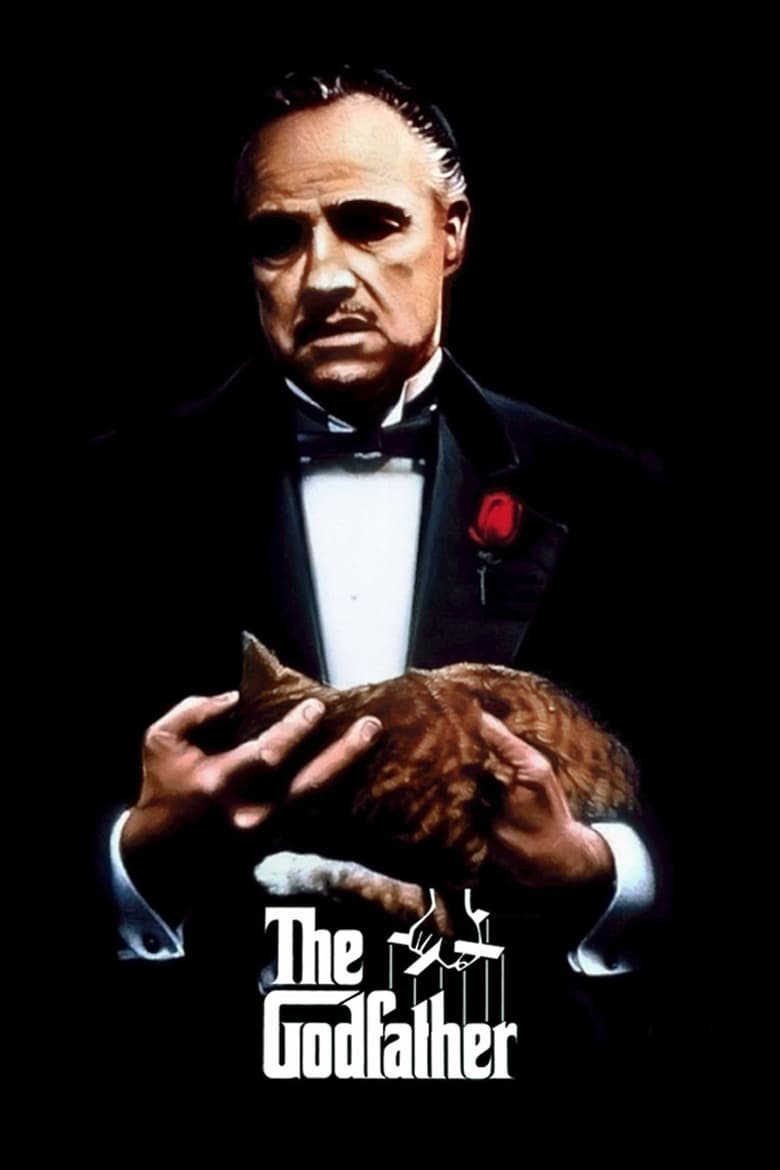
Movies like The Godfather Part II include The Godfather (1972), The Godfather Part III (1990) and The Irishman (2019). Of the 12 closest matches, several are films written by Mario Puzo, and most are gangster films.
- The GodfatherPeople:
- The Godfather Part IIIPeople:
- The IrishmanPeople:
- Kiss of DeathStory type:
- Mean StreetsCharacters:
- The SicilianPeople:
- Force of EvilCharacters:
- The Many Saints of NewarkStory type:
- Infernal Affairs IICharacters:
- SuburraWorld:
- Once Upon a Time in AmericaWorld:
- Donnie BrascoWorld:




Why this pick
Explore by
What else shares a premise, people or place with The Godfather Part II?
485 other films share the rarest tag below, relationship: sibling rivalry. Each tag opens Browse with the films that share it.