
Dune: Part Two
Long live the fighters.
- Director
- Denis Villeneuve
- Starring
- Timothée Chalamet, Zendaya, Rebecca Ferguson, Javier Bardem
Follow the mythic journey of Paul Atreides as he unites with Chani and the Fremen while on a path of revenge against the conspirators who destroyed his family. Facing a choice between the love of his life and the fate of the known universe, Paul endeavors to prevent a terrible future only he can foresee.
Where to watch
Where can I watch Dune: Part Two?
As of October 24, 2026, MovieCove lists Dune: Part Two streaming on HBO Max and to rent or buy on Apple TV and Prime Video.
Subscription


Your rating, lists and review
Highlights
What stands out about Dune: Part Two?
Dune: Part Two earns 11 badges, led by Top 1% of films and Universally Loved.
- Top 1% of films, Rank badge.99th percentile Midcredits score
- Universally Loved, Reception badge.92% rated it 7 or higher
- Cultural touchstone, Reception badge.Among the most-seen films, 4.5M ratings
- Visual feast, Craft and mood badge.Praised by fans (96) and detractors (85)
- Atmospheric, Craft and mood badge.Praised by fans (93) and detractors (70)
- Star-studded, Cast badge.9 of the billed cast already had a top-10% actor's standing
- Box Office Hit, Awards and box office badge.Returned 3.8× its budget
- Award Winner, Awards and box office badge.22 wins and 77 more nominations
Show 3 moreShow fewer
- Rank
- Reception
- Craft and mood
- Awards and box office
- Cast
Reception
Is Dune: Part Two worth watching?
Dune: Part Two's Midcredits score is the 99th percentile of all films, from 4.5M ratings across 6 sources. 92% liked it (rated it 7 or higher out of 10).
Midcredits score
99th percentile
Better received than 99% of films
84 /100
98th percentile of all films
Critics 79 · Audience 85
Rating distribution
votes at each rating level (1–10)
Ratings pile up at 9–10 with almost no detractors — near-universal love.
92% liked it
99th percentile of all films
Critics 92% · Audience 95%
Awards
0 Oscars won · 0 Oscar noms · 22 wins / 77 noms overall
- NominatedGolden Globes· Best Motion Picture - Drama
- NominatedGolden Globes· Best Original Score - Motion Picture
99th percentile
4.5M ratings across platforms
Box office
Returned 3.8× its budget — 98th percentile earner in its genre.
What reviewers say
Common ground
Both camps agree the film is a stunning visual and technical achievement that feels emotionally cold and overlong.
Fans praised
- jaw-dropping cinematography and visual spectacle
- immersive world-building and epic scale
- powerful Hans Zimmer score and sound design
Detractors panned
- underwhelming, one-dimensional villains
- muddled storytelling with gaping logic holes
- mumbling, flat vocal performances
What stands out
staggering IMAX visuals, masterful composition and practical-CGI blend
fully realized alien world, lived-in texture, epic gravity
sandworms and set pieces are breathtaking; some action sequences feel anticlimactic
Hans Zimmer's score is overwhelming and immersive; some call it too loud
uneven cast; Chalamet and Ferguson praised, Walken and Zendaya criticized as wooden
weak villain development, Chani's rewritten role divisive, supporting players underused
slow first half, rushed climax; 166 minutes feels both long and disjointed
rushed second half, incomplete adaptation, confusing political mechanics
Preferred by
No notable difference between any of the groups: each pair ranks it within 10 percentile points.
- Women vs men 2 points apart
- Under-30s vs over-30s 1 point apart
- Critics vs users 1 point apart
- US vs non-US 1 point apart
Watch experience
What is Dune: Part Two like to watch?
Watch this when you are ready for heavy feelings, and you want to be swept up in something big.
What it asks of you
Room for heavy feelings.
What it feels like
Big and sweeping.
How it leaves you
Haunted.
Story archetype
Every story archetype, clockwise from the top
- Monster 21% (this title): Predator 6% · Tyrant 6% (this title) · Invasion 2% · Oppressive state 2% · Corporate villainy 1% · Institutional injustice 1% · Class system under 1% · Technology turns under 1% · Inner demon 1%
- Rags 3%: Underdog triumph 2% · Social ascent under 1% · Fame and fortune under 1% · Rise and fall under 1% · Hidden worth revealed under 1%
- Quest 10%: Treasure hunt 1% · Rescue 4% · Mission 5% · Journey home under 1% · Pilgrimage 1%
- Voyage 4%: Portal fantasy under 1% · Fish out of water 2% · Survival ordeal 1% · Time displacement under 1% · Descent 1%
- Comedy 11%: Romantic comedy 4% · Comedy of errors 3% · Farce 2% · Buddy comedy 1% · Comedy of manners 1%
- Tragedy 9%: Hubris 1% · Obsession 2% · Corruption arc 2% · Doomed love 2% · Crushed by fate 3%
- Rebirth 13%: Redemption 3% · Healing 5% · Liberation 2% · Second chance 2%
- Mystery 7%: Puzzle 1% · Investigation 5% · Enigma 2%
- No archetype 22%
What it's about
Every theme, clockwise from the top
- Bonds 27%: Romantic love 15% · Marriage 2% · Family bonds 21% · Parenthood 2% · Friendship 9% · Loyalty 4%
- Self 22%: Identity 14% · Coming of age 5% · Aging under 1% · Self-worth 7% · Ambition 7% · Purpose 9% · Memory 3% · Obsession 3%
- Power 7%: Power 2% · Corruption 3% · Greed 3% · Class 3% · Oppression 4% · Freedom 5%
- Morality 16%: Justice 13% · Duty 2% · Revenge 4% (this title) · Guilt 3% · Redemption 6% · Forgiveness 1% · Sacrifice 4% · Betrayal 5% · Deception 9%
- Survival 15%: Survival 17% · War 1% · Violence 4% · Mortality 2% · Grief 6% · Trauma 7% · Mental illness 1% · Addiction 1% · Illness and disability under 1%
- Society 9%: Community 14% · Isolation 5% · Prejudice 3% · Displacement 1% · Faith 3% · Tradition vs change 2% · Fame 3% · Legacy 4% (this title)
- Ideas 5% (this title): Fate 1% (this title) · Free will under 1% · Truth 4% · Hope 5% · Nature 2% · Art 4% · Technology 1%
The world
Content guide
Is Dune: Part Two okay for kids?
PG-13Dune: Part Two is rated PG-13: “Rated PG-13 for sequences of strong violence, some suggestive material and brief strong language” (MPAA). As of October 26, 2026, Midcredits content scores put its violence at intense (67/100), sexual content at mild (31/100), language at mild (30/100), drug and alcohol content at mild (29/100) and frightening material at intense (67/100). Overall it is heavier than 79% of PG-13-rated films.
Ratings in 42 other countriesRatings elsewhere
- UK12A
- CanadaPG
- AustraliaM
- Germany12
- France12
- Ireland12A
- New ZealandM
- JapanG
- South Korea12
- Brazil14
- Argentina+13
- Belgium14
- BGC
- CL14
- Czechia12+
- Denmark11
- FinlandK-12
- Hong KongIIA
- Hungary16
- Israel12
- Italy6+
- LTN-13
- LU12
- MexicoB
- MYP13
- Netherlands12
- Norway12
- PhilippinesPG
- Poland16
- PortugalM/12
- PRPG-13
- RO12
- SingaporePG13
- SK12
- Spain12
- Sweden11
- Switzerland12
- Taiwan12+
- THG
- Türkiye13+
- UA16+
- VIPG-13
Point along a line to see a well-known title at that level.
The reason to think twice is frightening material and violence. Everything else sits at or below what PG-13-rated films usually carry.
Source: Midcredits content scores, 0 (none) to 100 (severe) per category, with each standing ranked against other films that have them.
What content warnings does Dune: Part Two have?
MovieCove's classifier found 5 depicted content warnings in Dune: Part Two: Gore or body horror (severe), Gun violence (severe), Torture (moderate), War atrocities (moderate), Hate-motivated violence (mild). Each is backed by a verbatim quote from the parents' guide notes; a missing warning is not a guarantee of absence.
Cast and crew
Who is in Dune: Part Two?
Cast
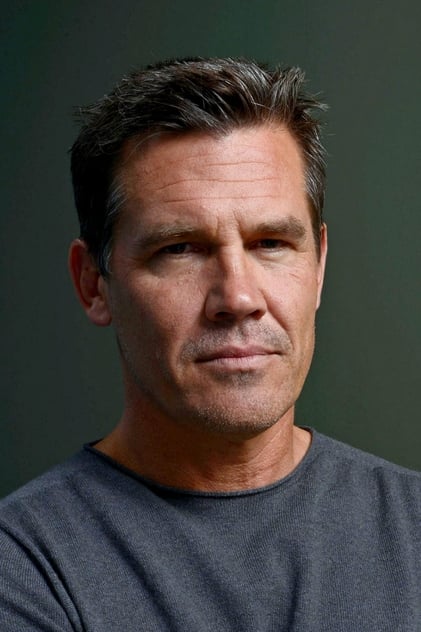
9 of the cast already had the standing of a top-10% working actor.






Crew
Directed by
Written by
Cinematography
Edited by
Music by
Produced by
+23 more
, Cale Boyter, Tina Oswald, James Grant, Thomas Tull, Fuad Khalil, Amanda Confavreux, Diala Al Raie, Jessica Derhammer, Jon Spaihts, Robbie McAree, Byron Merritt, Trevor Bagge, Tanya Lapointe, Brian Herbert, Kim Herbert, Joshua Grode, Denis Villeneuve, Gergö Balika, Howard Ellis, Herbert W. Gains, Adam Goodman, John Harrison, Toby HeffermanMore like this
What are movies like Dune: Part Two?
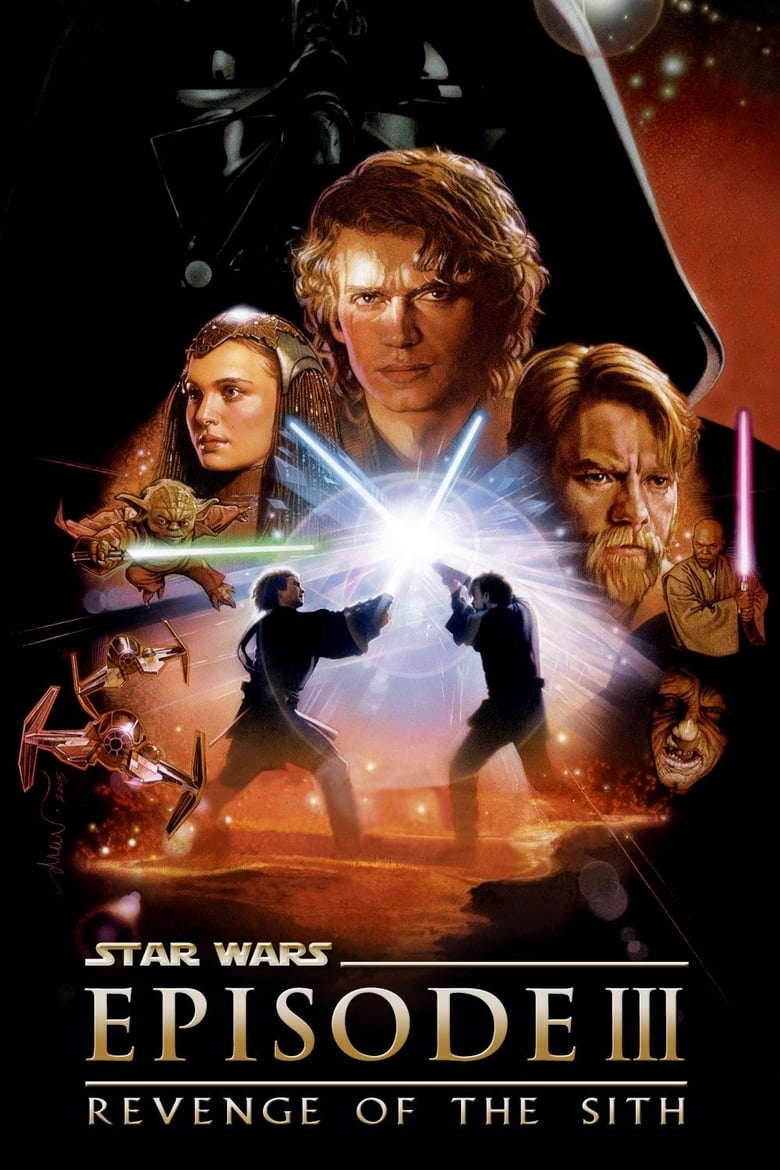
Movies like Dune: Part Two include Dune (2021), Dune (1984) and Jupiter Ascending (2015). Of the 12 closest matches, two are films written by Frank Herbert, and several are films set in the far future.
- DunePeople:
- DunePeople:
- Jupiter AscendingReception:
- The MatrixWorld:
- The Matrix ReloadedWorld:
- Ender's GameReception:
- PrometheusPeople:
- Star Wars: Episode III - Revenge of the SithSubject:
- InterstellarPeople:
- Star Wars: Episode II - Attack of the ClonesSubject:
- The Time MachineWorld:
- BorderlandsPeople:




Why this pick
Explore by
What else shares a premise, people or place with Dune: Part Two?
263 other films share the rarest tag below, kind of film: space opera. Each tag opens Browse with the films that share it.